At Goodwill Industries of the Chesapeake, our mission is to change lives through the power of work. This Black History Month, we’re honoring five remarkable individuals whose courage and vision helped shape the educational and workforce landscapes we know today. These Black historical figures and their stories remind us that progress is always possible and that it often starts with one person refusing to accept the way things are.
1. Mary McLeod Bethune (1875–1955)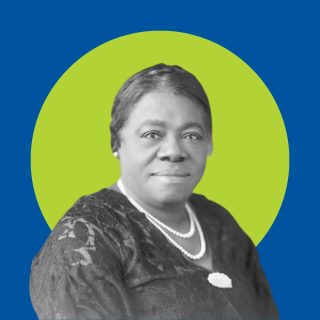
Mary McLeod Bethune was a highly influential educator and activist. Born the daughter of two formerly enslaved people in Reconstruction Era South Carolina, she transformed humble beginnings into a legacy of change.
Bethune grew up splitting her time between attending school and picking cotton on the farm her mother saved up to buy following the Civil War. She worked in several small Southern schools before founding her own boarding school, the Educational and Industrial Training School for Negro Girls, in 1904. With virtually no money to start with, Bethune worked diligently and resourcefully to build the school from the ground up. In 1923, the school merged with the Cookman Institute, the first Black college in Florida, to become Bethune-Cookman College.
Her influence extended far beyond the classroom. Bethune was a close advisor to President Franklin D. Roosevelt, and when he appointed her Director of the Negro Affairs Division of the National Youth Administration, she became the first high-ranking Black woman in the federal government. She was also the only Black woman present in an official position when the United Nations was chartered. Over the course of her incredible life, Bethune founded and led several organizations advocating for racial and gender equality, including the National Council of Negro Women.
2. Maggie Lena Walker (1864–1934)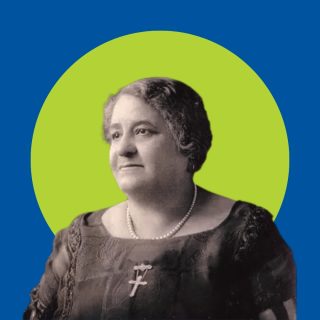
Maggie Lena Walker was a prominent businesswoman from Richmond, Virginia who built institutions that opened doors not just for herself, but for her entire community.
Walker founded what became Richmond’s most popular Black newspaper before becoming both the first Black woman to charter a bank and the first Black woman to serve as bank president. Her St. Luke Penny Savings Bank made homeownership a real possibility for Black families in her community who had long been shut out.
Walker’s success was never just her own. She used her position to lead advocacy organizations like the National Association of Wage Earners and actively hired Black women in her business ventures, offering them higher-paying positions at a time when their options were often limited to domestic work.
3. Dorothy Height (1912–2010)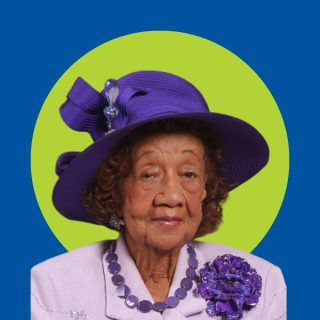
Dorothy Height was a civil right activist who understood that injustice rarely comes in just one form. As president of Bethune’s National Council of Negro Women for 40 years, she championed an intersectional approach to equality—one that recognized the overlapping struggles faced by Black women in particular.
Height worked her way to become a prominent voice in the height of the Civil Rights Movement. She became a close advisor to leaders like First Lady Eleanor Roosevelt, President Dwight D. Eisenhower, and President Lyndon B. Johnson. Height also sat on several significant committees to advance workers’ rights, including the President’s Committee on the Employment of People with Disabilities and the Presidential Commission on the Status of Women. Her voice helped shape policies that expanded the rights of workers for generations to come.
4. A. Philip Randolph (1889–1979)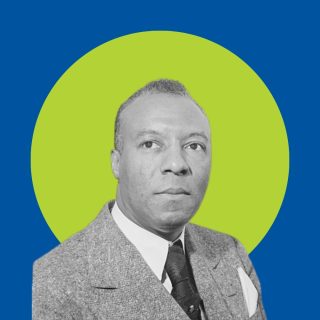
A. Philip Randolph was a labor unionist who believed that labor rights and civil rights were inseparable. He founded and led the Brotherhood of Sleeping Car Porters, the first predominantly Black labor union to receive a charter from the American Federation of Labor. Randolph also co-organized the historic 1963 March on Washington for Jobs and Freedom.
His advocacy pushed forward several executive orders that ended legal segregation in the U.S. military. Together with Bayard Rustin, he established the A. Philip Randolph Institute, a landmark organization built to unite the Civil Rights Movement and the Labor Movement.
5. Bayard Rustin (1912–1987)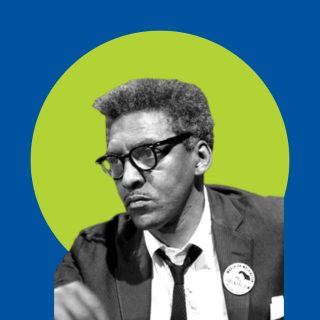
Few people shaped the Civil Rights Movement as profoundly as Bayard Rustin, and with little public recognition compared to his counterparts.
Rustin was a highly influential activist who worked closely with other Black historical figures like A. Philip Randolph and Dr. Martin Luther King, Jr. He was the chief organizer of the 1963 March on Washington where King made his famous ‘I Have a Dream’ speech, and his 1947 Journey of Reconciliation laid the groundwork for the Freedom Rides of 1961.
As a gay man, Rustin often worked behind the scenes to protect himself and the broader movement from criticism of his sexuality. In the 1980s, however, he stepped forward as a vocal advocate for LGBTQ+ rights. He also co-founded and served as the first president of the A. Philip Randolph Institute, carrying forward the alliance between civil rights and labor that he and Randolph had built together.
Their Legacy Lives On
These five individuals didn’t just make history, they paved the way to opportunity for generations of Americans. Their work in education, labor, and civil rights created pathways that continue to shape how we think about workforce opportunity and equity today.
At Goodwill, we carry that spirit of possibility into everything we do. From job skills training programs to our adult high school, we’re committed to making sure everyone has access to the tools they need to thrive. Learn more about our mission programs at goodwillches.org/programs.